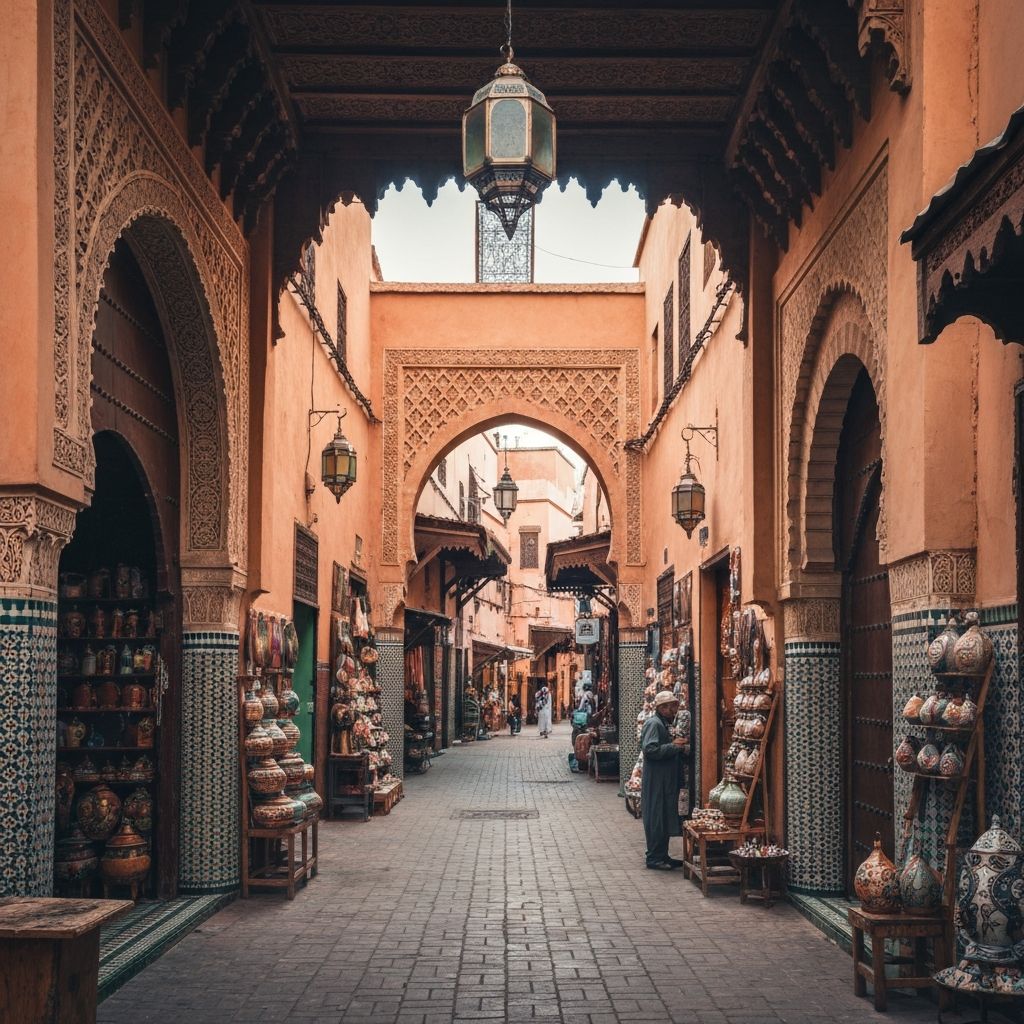
From camel caravans to modern highways: a brief look at how travel has evolved.
Driving Morocco's modern highways, it's fascinating to think about how different travel was here just decades ago, let alone centuries. For over a thousand years, camel caravans were the primary transport across Morocco, especially for the trans-Saharan trade routes bringing gold, salt, and goods between sub-Saharan Africa and Mediterranean ports. Marrakech was a major caravan terminus - those same routes you drive on roughly follow ancient caravan paths. Camels could go weeks without water and carry heavy loads, making them perfect for desert crossings. The French colonial period (1912-1956) brought the first paved roads and railways, mainly connecting ports to inland cities for resource extraction. Many of those roads still form the backbone of Morocco's highway network. After independence in 1956, King Hassan II invested heavily in road infrastructure, seeing it as crucial for national unity and economic development. The highway system expanded dramatically in the 1970s-90s. In the 2000s under King Mohammed VI, Morocco launched one of Africa's most ambitious infrastructure programs. The Marrakech-Agadir highway opened, cutting travel time in half. The Tangier-Casablanca highway is world-class. The Casablanca tramway modernized urban transport. High-speed rail (Al Boraq) connecting Tangier to Casablanca began in 2018 - Africa's first high-speed train. Morocco now has over 57,000km of roads, with more being built or upgraded constantly. Yet in remote mountain villages, donkeys and mules still transport goods on paths unchanged for centuries. The Marrakech medina's narrow streets were designed for donkeys and foot traffic - cars simply don't fit. This blend of ultra-modern and ancient is part of Morocco's charm. The same country where you can drive 160 km/h on a state-of-the-art highway is where shepherds still move flocks across roads as they have for generations. Understanding this transportation history helps you appreciate the infrastructure you're using and the diverse Morocco you're driving through - from mountain tracks to coastal expressways, all connected by centuries of travel tradition.